
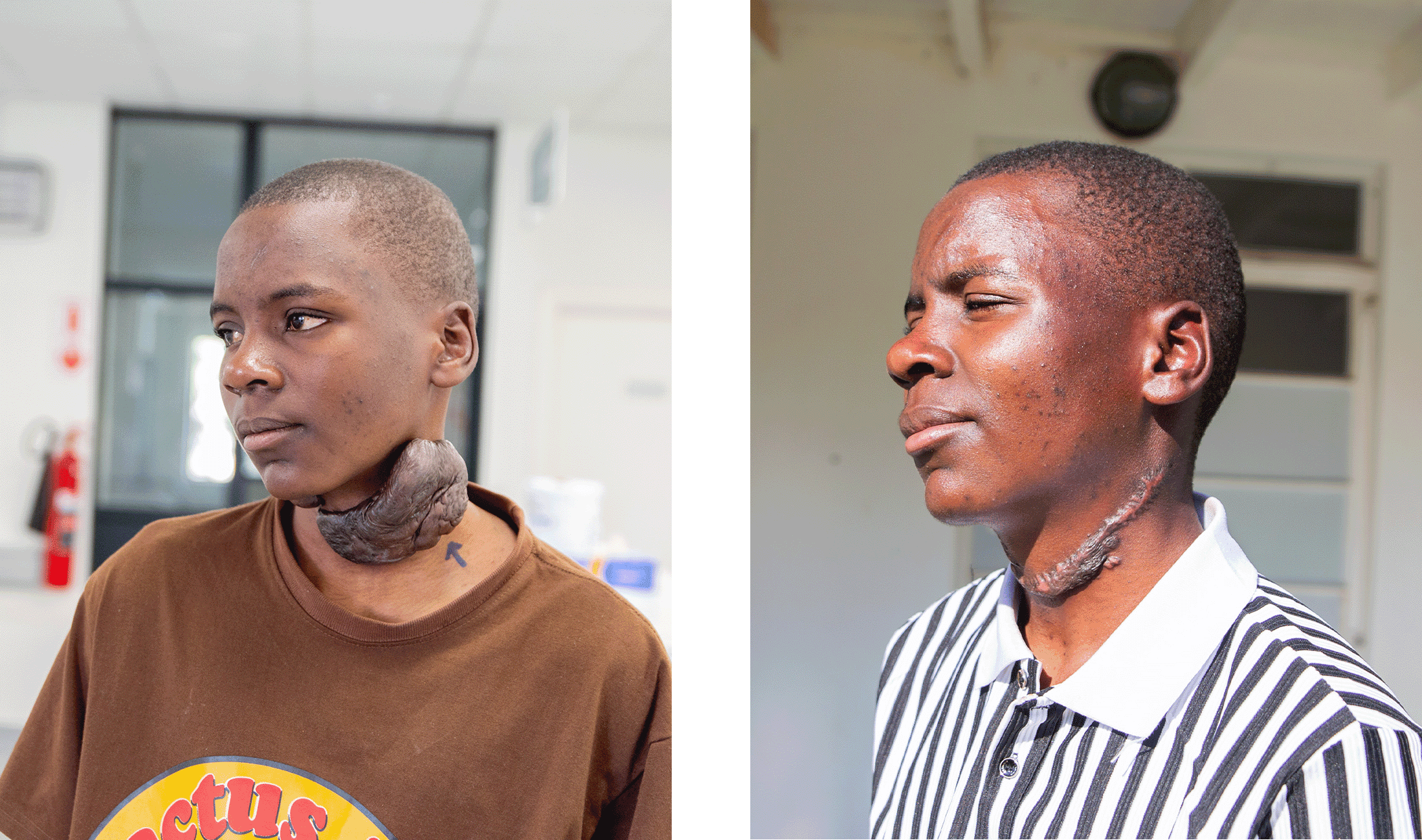
For 15-year-old Emmanuel, life in rural Zimbabwe was much like that of many boys his age. After school, he spent his afternoons running through fields with friends, never imagining that an ordinary thorn scratch would change his life.
At first, the injury seemed too minor to mention. The wound healed quickly, but the skin beneath it did not.
Instead, a thick, raised keloid scar began to develop along the side of his neck. Keloids occur when the body produces too much scar tissue as a wound heals. Unlike ordinary scars, they continue to grow beyond the original injury and can become painful, itchy, and emotionally distressing. Month after month, the scar continued to grow until it became impossible to ignore.
Living Behind a Collar
As the scar became more noticeable, Emmanuel grew increasingly self-conscious.
“I try everything I can to hide my neck from people,” he says. “It feels really uncomfortable when they keep staring at me.”
Each morning, choosing what to wear became less about comfort and more about concealment. High-collared shirts and turtlenecks became his daily armour, even during Zimbabwe’s hottest days. Covering his neck felt easier than enduring the curious looks, whispered comments and unwanted attention.
At school, classmates sometimes used the scar to mock him during disagreements. Although he tried not to let their words affect him, they gradually chipped away at his confidence.
“It really affected how he saw himself,” says his father, Kuhlengisa. “At his age, children are already very self-conscious. This lowered his self-esteem.”
More Than a Scar
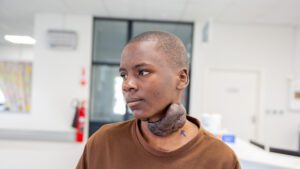
The keloid affected far more than Emmanuel’s appearance.
As it continued to grow, it became persistently itchy, painful and irritated. Concentrating in class became increasingly difficult, and on some days the discomfort was so severe that he stayed home from school.
Concerned about his son’s condition, Kuhlengisa took Emmanuel to their local hospital, hoping treatment would stop the scar from growing.
Doctors recommended a series of steroid injections to reduce the excessive scar tissue. Despite several treatments, the keloid showed little improvement.
Surgery became the next option.
For Emmanuel’s family, however, it felt completely out of reach.
The cost of the operation was far beyond what they could afford. Like many families living in rural Zimbabwe, they found themselves caught between a treatable condition and the financial reality which made accessing specialised surgical care impossible.
Hope Through CURE
Hope arrived through an unexpected conversation.
A family friend, whose own child had previously received successful treatment for keloids at CURE Children’s Hospital of Zimbabwe, encouraged Kuhlengisa to seek help there. She explained that through the hospital’s sponsored surgical programme, children receive life-changing surgical care regardless of their family’s ability to pay.
For Emmanuel, it was the first time in years that he allowed himself to imagine life without the scar.
“I will never forget the day I was told I could receive treatment,” he says.
In May 2026, Emmanuel underwent surgery at CURE Children’s Hospital of Zimbabwe. He received the specialised surgical care from a multidisciplinary team committed to restoring not only physical health but also confidence and quality of life. For children with conditions like Emmanuel’s, timely surgery can have a lasting impact on both their well-being and future opportunities.
The operation removed the keloid, but it also lifted a burden he had carried for years.
Looking Ahead with Confidence
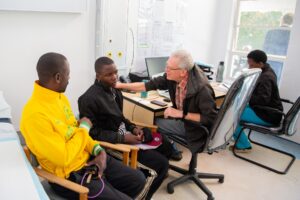
For the first time in a long time, Emmanuel no longer felt the need to hide his neck before leaving the house.
The clothing that had once served as his shield was no longer necessary.
As the weeks passed, the quiet, self-conscious teenager who had spent years avoiding attention began to rediscover his confidence.
The change did not go unnoticed.
“Emmanuel tells me that his friends are happy for him as well,” says Kuhlengisa. “Even his Grade 7 teacher came to visit him after his surgery. They are all delighted by his progress, and as his father, I couldn’t be happier to see how far he has come.”
Today, Emmanuel no longer reaches for a high-collared shirt before leaving home. Instead, he walks into school with renewed confidence, free to focus on his education, his friendships and the future ahead.
What began as a small thorn scratch no longer defines his life.
Help Another Child Find Healing
Emmanuel’s story is one of many.
Every year, children across Zimbabwe live with treatable conditions that remain untreated simply because surgery is beyond their family’s financial reach. Through the sponsored surgical programme at CURE Children’s Hospital of Zimbabwe, children like Emmanuel receive life-changing care regardless of their ability to pay.
When you support CURE, you help provide not only surgery, but also renewed confidence, restored hope and the opportunity for children to look towards the future without fear.
Give today and help another child experience the life-changing gift of healing.
About the CURE Children’s Hospital of Zimbabwe
Established in April 2021, CURE Zimbabwe is the first and only hospital in the country of 14 million people to provide orthopedic care for disabilities such as clubfoot, bowed legs, and knock knees to children regardless of their economic status. The teaching hospital has 18 beds, three operating theaters, and an outpatient clinic. The hospital was refurbished by the Zimbabwe Orthopedic Trust in partnership with the Zimbabwean government and is located adjacent to United Bulawayo Hospital in Bulawayo.


