
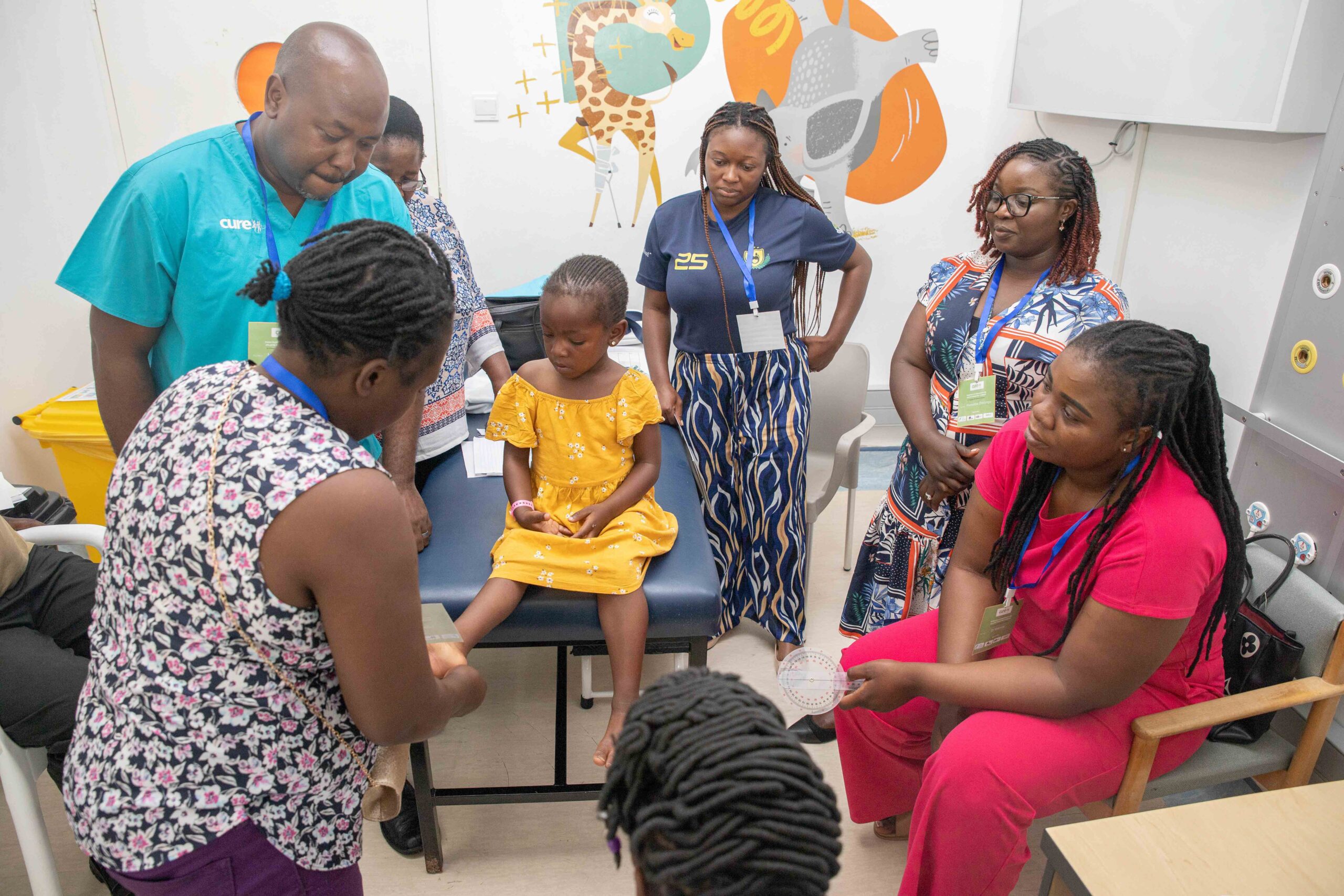
In a groundbreaking step toward improving pediatric orthopaedic care, CURE Zimbabwe, in partnership with the Global Clubfoot Initiative, the Zimbabwe Orthopaedic Association, and the Zimbabwe Sustainable Clubfoot Program, hosted a unique course on the Principles of Management for Delayed Presenting Clubfoot (DPC).
The two-day workshop, held in Bulawayo, brought together 25 medical professionals from across the country, including surgeons, physiotherapists, and rehabilitation specialists.
Participants are seen examining a skeletal model of a human ankle during the Delayed Presenting Clubfoot Course.
Initially developed at CURE Ethiopia, the unique course has made its first entry into Zimbabwe.
The training focused on practical and advanced techniques for treating older children with clubfoot, a congenital condition that twists the foot out of position.
Participants explored the correction of the CAVE deformity, using the Paver score method, treatment planning, foot manipulation and casting, and surgical interventions for complex or delayed cases.
Dr Laurence Wicks, who coordinated the training, described it as “very successful.” He said participants not only met but exceeded the objectives. “We’ve already received feedback that clinicians are applying what they learned in real cases,” he said. “It’s encouraging to see immediate impact.”
Mr Khuzi Ncube, Deputy Director of Rehabilitation Services in Zimbabwe, attended the course and praised its impact. “This was an advanced course, the first time I’ve used the Paver score,” he said, referring to a system used to assess clubfoot severity. “We have 15 accredited stations across the country, and I’ll be passing this knowledge to over 100 practitioners nationwide.”
The Zimbabwe Sustainable Clubfoot Program’s Director, Ryan Bathurst, said the course also helped bridge communication between regional practitioners and the CURE team. “This was the first formal DPC training in Zimbabwe,” Bathurst said. “It’s been great to see people from different provinces come together, learn, and understand how CURE operates. There’s often a gap between perception and reality, what people think CURE does and what actually happens. This training helped close that gap and build stronger referral pathways.”
He added that even small lessons, such as how to manage a child’s anxiety during casting, made a significant difference. “You can’t be snapping scissors in front of a nervous child,” he said with a smile. “Subtle things like concealing tools can turn a stressful clinic into a calm, healing space.”
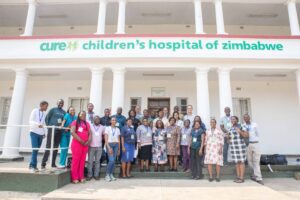
Course Participants pose for a group photo infront of CURE Administration offices.
Debra Mudariki, Global Clubfoot Initiative’s Senior Manager for International Education and Clinical Development, emphasised the collaborative learning environment. “The great thing about this experience is that we’re learning from each other,” she said, “I can’t claim to know everything. It’s a shared process of teaching and discovery.”
Dr Wicks noted that eight children who were part of the live training cases are continuing their treatment through serial casting at CURE Zimbabwe.
As the course concluded, participants expressed optimism that this collaboration would lead to more integrated care for children with clubfoot across Zimbabwe.
“This was a big step in the right direction,” Dr Wicks said. “I was happy for the opportunity to build relationships with rehab departments from around Zimbabwe.”
About the CURE Children’s Hospital of Zimbabwe
Established in April 2021, CURE Zimbabwe is the first and only hospital in the country of 14 million people to provide orthopedic care for disabilities such as clubfoot, bowed legs, and knock knees to children regardless of their economic status. The teaching hospital has 18 beds, three operating theaters, and an outpatient clinic. The hospital was refurbished by the Zimbabwe Orthopedic Trust in partnership with the Zimbabwean government and is located adjacent to United Bulawayo Hospital in Bulawayo.


